
Published
:05 Aug 2026
What is a Digital Nomad? Meaning, Jobs, Income, Lifestyle & How to Work From Anywhere!
A digital nomad is a location-independent professional who works remotely using the internet while living in different places for a period of time. Some move frequently, while others stay long term and relocate based on visas or projects.
Life was always unpredictable, but what's life without whimsy? Keeping this in mind, the present digital working class is all set to be called Digital Nomad. They use modern travel tech to stay efficient while on the move.
They are keen on their skills and can work anywhere around the globe with remote management. Today, this blog will guide you about the Digital Nomad, including lifestyle, jobs, income, and connectivity.
Yes, connectivity is the main component to achieve Digital Nomad status. And you know that eSIM is the best, present, and most seamless connectivity medium around the Globe, thanks to Yaalo!
What Exactly Do Digital Nomads Do?
Digital nomads do normal or high-tech jobs. They just do them online while living in different locations. Their day is a mix of focused work, admin tasks, and planning, often adjusted to a different time zone than their clients or employer.
The routine of a digital nomad typically includes:
- Joining client calls or team meetings across a different time zone
- Completing project work such as writing, coding, design, or marketing
- Sending invoices, tracking income, and managing a bank account
- Planning travel, visas, and accommodation for the next stay. Planning travel, visas, like the best time to visit London, and accommodation for the next stay.
- Managing work tools like email, cloud storage, task boards, and communication apps
The work comes first. Travel is a passion that is attached to it. Fulfilling your drive for passion with work oriented routine virtually is the most amazing profession considered worldwide in 2026.
What Jobs do most Digital Nomads do?
According to recent remote work trends, the demand for location-independent roles continues to grow in 2026. At the top of the list are the remote-based jobs. Because they can be monitored online and managed across borders. Digital Nomad roles are chosen for reliability, not lifestyle hype.
Common Digital Nomad Jobs
These jobs share three things:
- They don’t depend on location
- They can be tracked digitally
- They allow flexible schedules across time zones
This is why most digital nomads focus on stable remote roles, not short-term gigs.
How Do Digital Nomads Work Remotely?
Working remotely as a digital nomad is not about having many tools. It’s about having the right tools that prevent downtime when you travel. Below is how experienced nomads separate tools from outcomes.
Work Tools (Output)
These tools help digital nomads actually get paid:
- Cloud storage for files and backups
- Project management boards for deadlines
- Design, coding, or writing platforms based on their role
- Browser-based apps that work anywhere
Outcome: Work gets delivered on time, regardless of location.
Communication Tools (Coordination)
Remote work only functions with clear communication:
- Email for formal updates
- Chat tools for quick questions
- Video calls for weekly reviews or client meetings
Outcome: Clients trust you even if you’re in another country.
Internet Access (Reliability)
The Internet is the foundation. Most digital nomads use multiple connections to avoid losing work hours when Wi-Fi fails. This is where an eSIM like Yaalo matters. It provides instant mobile data in 200+ countries without using local SIM cards or risking public Wi-Fi.
Outcome: You stay online, even while moving between cities or countries.
Financial Tools (Stability)
Nomads also manage money digitally:
- Online banking for a global bank account
- Invoicing tools for client payments
- Expense tracking for cost-of-living control
- Tax records for long-term compliance
Outcome: Income stays predictable, even while travelling the world.
Bottom line:
Digital nomads work remotely by building systems that travel with them, like tools, connectivity, and workflows that function anywhere. When the internet fails, work stops. That’s why reliable mobile data is as important as a laptop.
Why Internet Access Matters for Digital Nomads
For digital nomads, internet access is income protection. To truly work from anywhere, connectivity must stay stable while locations change.
The real risks of unstable Wi-Fi
Public and rental Wi-Fi often fail during:
- Video calls with clients
- File uploads and cloud syncs
- Payments, logins, or security checks
- Peak hours in coworking spaces
One dropped connection can mean missed deadlines or lost trust. To avoid these drops, understanding what is data roaming and how to use it as a backup is crucial.
Why digital nomads need backup internet
Experienced nomads never rely on a single connection. They use mobile data as a secondary network when Wi-Fi slows, fails, or becomes unsafe.
This is where eSIMs matter, not as a product, but as a connectivity layer that works across countries without setup delays.
Border crossings break connectivity
When you cross borders:
- Local SIMs stop working
- Roaming becomes expensive or unreliable
- Finding a store takes time and breaks the workflow
An eSIM activates instantly in supported countries, keeping you online the same day you arrive.
Instant activation = uninterrupted work
With an eSIM, digital nomads:
- Stay connected during travel days
- Work from airports, trains, or new cities
- Avoid downtime between countries
Bottom line: If your income depends on the internet, connectivity is part of your work setup. With Yaalo eSIM Multiple Plans for 200+ countries, connectivity cannot become a hurdle anymore.
How Much Do Digital Nomads Earn?
Digital nomads earn between $800 and $5,000+ per month, depending on skills, experience, and client stability.
There is no fixed salary because most nomads are freelancers, contractors, or remote employees working long-term across multiple markets.
Typical monthly income ranges
Why income varies
Digital nomads earn differently because of:
- Skill demand (technical skills pay more)
- Client type (retainers vs one-off projects)
- Work structure (freelance, remote job, business)
- Time zone availability and communication reliability
- Long-term client relationships vs short contracts
Most stable earners focus on consistent clients, not constant travel.
What is the Cost of Living for a Digital Nomad?
The cost of living for digital nomads depends on choices. Two nomads in the same city can spend very differently based on lifestyle, housing, and work needs.
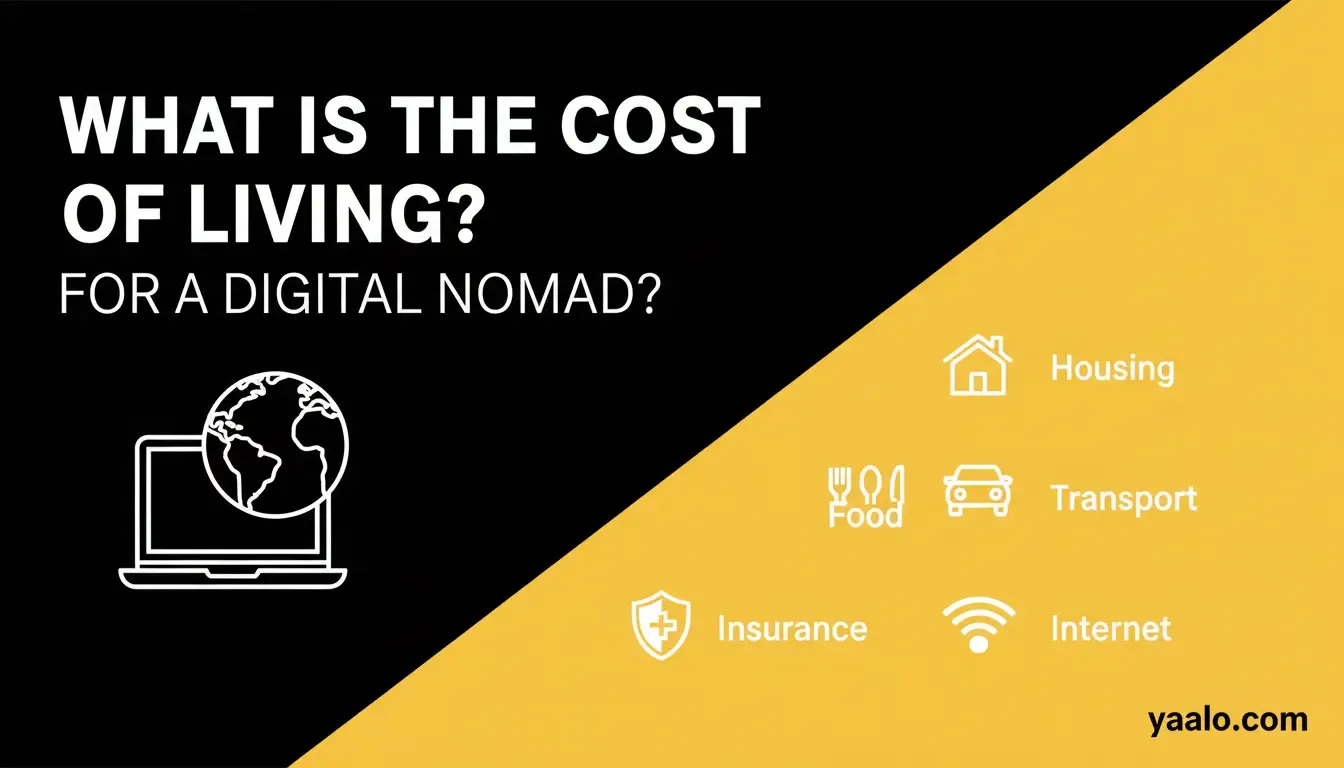
Main cost categories to plan for
The following are the cost categories that a nomad has to spend on:
Housing
Monthly rentals, short stays, or coliving spaces usually form the biggest expense. Many nomads also include the cost of a what is coworking space in their monthly budget for better productivity.
Food
Costs change depending on cooking vs eating out and local prices.
Transport
Includes local travel, regional flights, and occasional long-distance moves.
Insurance
Health insurance is essential for long-term travel and remote work stability.
Internet
This includes Wi-Fi, eSIM or local SIM mobile data, and backup connectivity (often overlooked but critical).
Practical planning rule
Digital nomads who budget well focus on:
- Predictable monthly costs
- Fewer location changes
- Reliable internet setups
- Long-term stays over constant movement
This approach reduces stress and keeps income stable while traveling.
Is Being a Digital Nomad Legal?
Being a digital nomad is not illegal, but it is regulated differently by each country. The legality depends on visa type, length of stay, and where your income comes from while travelling the world. To stay compliant, many professionals are now applying for official Digital Nomad Visas offered by over 50 countries.
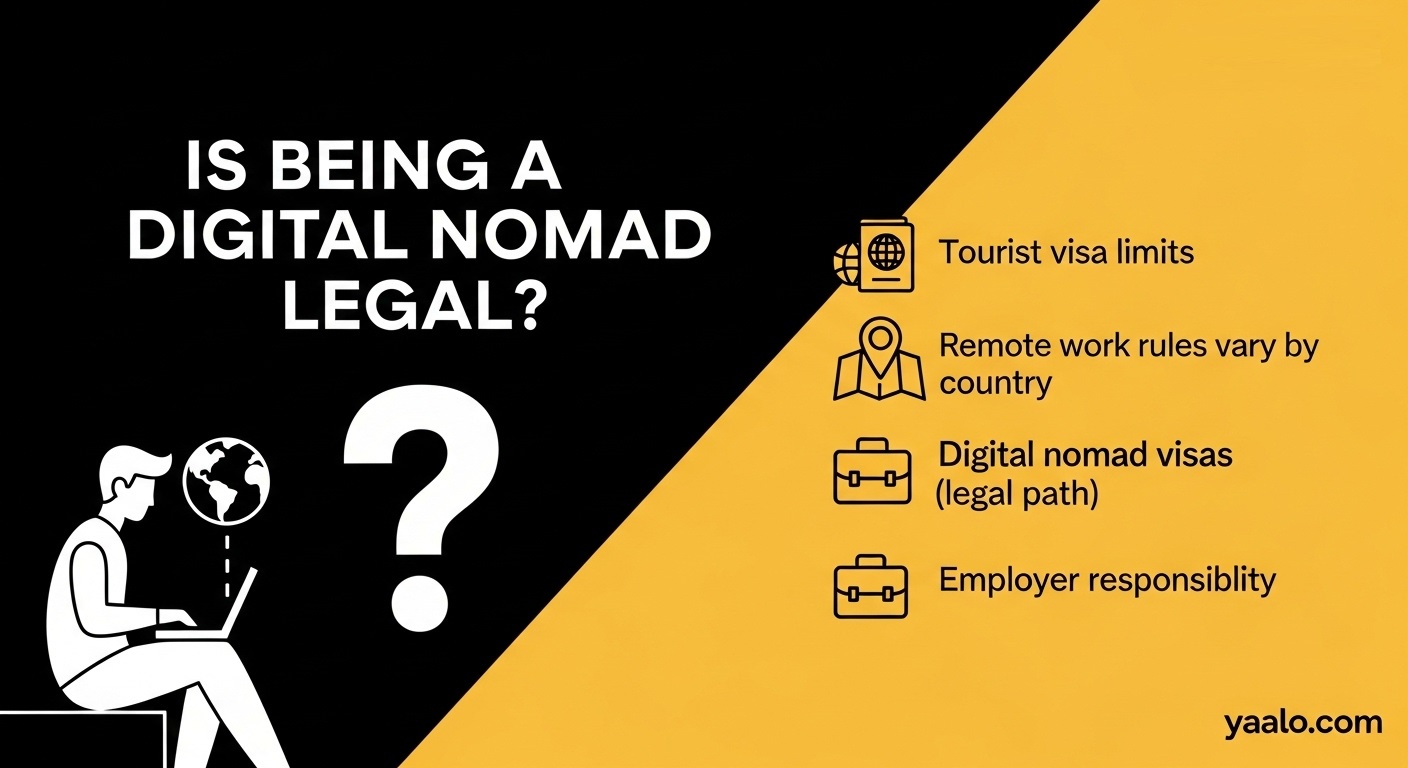
Tourist visa limits
Most tourist visas do not legally allow remote work, even if the work is online.
Many nomads still work quietly, but this is a gray area, not formal permission.
Remote work rules vary by country
Some countries tolerate remote work on tourist visas. Others enforce strict limits.
Rules change often, so checking official immigration sites matters.
Digital nomad visas (legal path)
Many countries now offer digital nomad or remote work visas that:
- Allow legal online work
- Require proof of income
- Limit local employment
- Set minimum stay periods
These visas are designed for long stays with clear rules.
Employer responsibility
Remote employees must also check:
- Employer policies
- Data access rules
- Country restrictions for company systems
Bottom line: Legal status depends on visa type, not job type.
Where Do Digital Nomads Pay Taxes?
Taxes for digital nomads depend on residency rules, not where you travel. This is where many people make costly mistakes.
Residency vs citizenship
Most countries tax based on tax residency, not passport.
If you stay too long in one country, you may become a tax resident there.
Home country obligations
Some countries require citizens to file taxes even when living abroad.
Others tax only local income. Knowing your home rules is essential before moving money into a bank account.
Risk of multiple-country taxation
Frequent travel can trigger tax obligations in more than one place if:
- You stay past residency thresholds
- You earn income locally
- You open accounts or register addresses
- This can lead to double taxation without proper planning.
When to consult a tax professional
You can consult a tax professional if you:
- Travel long term
- Earn online income
- Work for international clients
- Change countries often
A tax professional helps you stay compliant and avoid penalties.
Do Digital Nomads Need Health Insurance?
Yes. Health insurance is essential, not optional, for digital nomads.
Access to medical care changes the moment you leave your home country.
Medical access abroad
Without coverage, you may face:
- Full-cost hospital bills
- Refused treatment
- Limited care options
Many hospitals require proof of health insurance before treatment.
Visa requirements
Several digital nomad visas and long-stay permits require:
- International health coverage
- Emergency and hospital care
- Minimum coverage amounts
Without it, applications can be denied.
Emergency coverage matters
Travel accidents, illness, or evacuation costs can be financially devastating without insurance.
Long stays increase risk
The longer you stay abroad, the higher the chance you will need care. Insurance protects both your health and your finances.
Rule of thumb: If you work remotely abroad, insurance is part of your setup, just like the internet and housing.
What are the Pros and Cons of the Digital Nomad Lifestyle
The digital nomad lifestyle offers freedom, but it also demands discipline and planning. Understanding both sides helps people decide based on reality. The following comparison of pros and cons will set a clear picture:
Key takeaway: The benefits are real, but only if you can manage uncertainty and self-structure.
Who Should (and Shouldn’t) Become a Digital Nomad?
Not everyone should embrace the digital nomad path. The lifestyle rewards some people and drains others.
Good fit for:
- People who already work remotely
- Self-managed professionals
- Freelancers with stable clients
- Those comfortable with change
- People who plan their finances ahead
Not recommended for:
- People who need daily structure
- Anyone without savings
- Those uncomfortable with uncertainty
- Jobs that require local presence
- People avoiding admin and planning
Reality check: Nomad life is a logistics lifestyle, not a vacation lifestyle.
Example of a Digital Nomad
The following example will help you to understand what travel and work look like in real life, without exaggeration.
A UX designer from Spain works remotely for a SaaS company. The designer ensured a smooth transition by knowing how to install eSIM on Android or iPhone before leaving Spain. He stayed in Portugal for three months on a legal stay. Work happens from 9 a.m. to 5 p.m., just like at home. Their routine includes:
- Client calls in one fixed time zone
- Daily project work
- Grocery shopping and cooking
- Evening walks, not sightseeing
- Weekly planning and budgeting
He earns a stable income. Travel fits around work, not the other way around. That’s real digital nomad life: normal work, new location, same responsibility.
Conclusion
Being a digital nomad is all about laptop living. The people who succeed long term are the ones who treat the internet, income, health insurance, and legal planning as essentials, not afterthoughts.
That’s where connectivity quietly matters most. With a global eSIM like Yaalo, you stay online the moment you land, cross borders without downtime, and keep work moving even when local Wi-Fi fails.
When your tools travel with you, and your internet does too, location independence becomes simple, stable, and sustainable.
FAQs
1. What exactly do digital nomads do?
Digital nomads work remotely using the internet while living in different locations. Their daily work includes client calls, project delivery, admin tasks, and planning travel or visas. Most follow normal work hours, manage a bank account online, and plan their schedule around different time zones.
2. Is being a digital nomad legal?
Being a digital nomad is legal if your visa allows remote work. Tourist visas often do not permit online work, even for foreign employers. Many countries now offer digital nomad visas that legally allow remote work if income requirements and stay limits are met.
3. What is the average salary of a digital nomad?
The average digital nomad income ranges from $800 to $5,000+ per month, depending on experience and skills. Beginners earn less, while experienced professionals earn more through long-term clients, remote jobs, or online businesses. Income depends on client quality, stability, and the ability to work consistently long term.
4. Do digital nomads get taxed twice?
Digital nomads can be taxed twice if they trigger tax residency in more than one country. Taxes depend on residency rules, not travel. Staying too long in one place or maintaining strong home ties can create multiple obligations, so consulting a tax professional helps avoid double taxation and penalties.
5. How much money do you need to become a digital nomad?
Most digital nomads need savings equal to 3-6 months of living expenses before starting. This covers housing, food, insurance, internet, and emergencies. Having a stable remote income before traveling reduces financial stress and helps maintain long-term sustainability while working and traveling abroad.
Related Blogs


Nina Alexandra ●
06 Apr 2026
Best Digital Nomad Lifestyle: Slowmading Burnout & Community
Digital Nomads